
When we say „business automation“, for many people, this still sounds like something complicated—artificial intelligence, APIs, integrations, databases, and a whole bunch of technical terms.
Actually, the idea is much simpler:
We identify a repetitive business process that consumes time, people, and resources, and we build a system that automates much of this work.
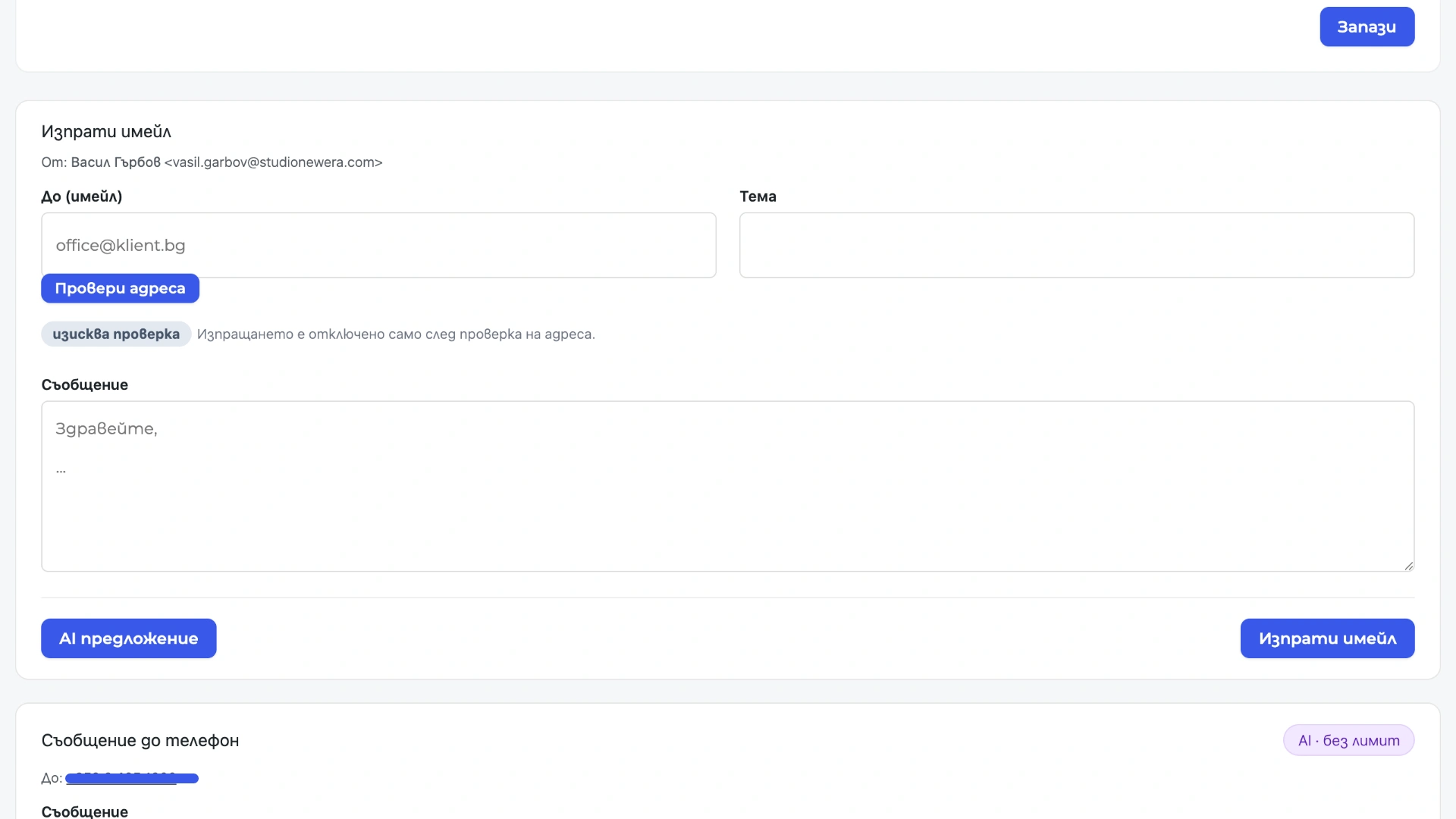
В Studio New Era We recently did just that to address one of our own challenges—finding new B2B customers.
And just one month after the system went live, a single completed sale was enough to cover the investment in its development.
Here's how it works.
The problem: How do you find the right companies without anyone having to spend their entire day searching?
As with many B2B businesses, finding new potential customers was, for a long time, largely a manual process for us as well.
Someone needs to:
- find suitable companies;
- find out what they do;
- find out who is controlling them;
- find contacts;
- determine whether the company is even a potential client;
- write a message or an email;
- check to see if there is a reply;
- follow up;
- keeps track of calls and offers.
All of this can be done by a merchant.
But a large part of it could also be automated.
That's why we built our own CRM system, tailored to the way we sell.
Step 1: Let's start with the data
We used the API of a provider of public business information.
Instead of a user having to search company by company, the system can automatically retrieve structured information such as:
Who is the company's manager? Contact information, phone number, email, primary business activity, financial indicators, and revenue for previous years.
This is where the interesting part begins.
Because it's not enough to simply have a database of 10,000 companies.
We can say:
We are looking for companies in a specific sector, of a certain size, with a certain revenue, and a specific profile.
And the system can help us find exactly those people.
For example, if you offer a product or service specifically for manufacturing companies above a certain size, there’s little point in having your sales team waste time on companies that don’t fit that profile.
Automation allows us to filter the market right from the start.
Step 2: Potential customers are automatically added to the CRM
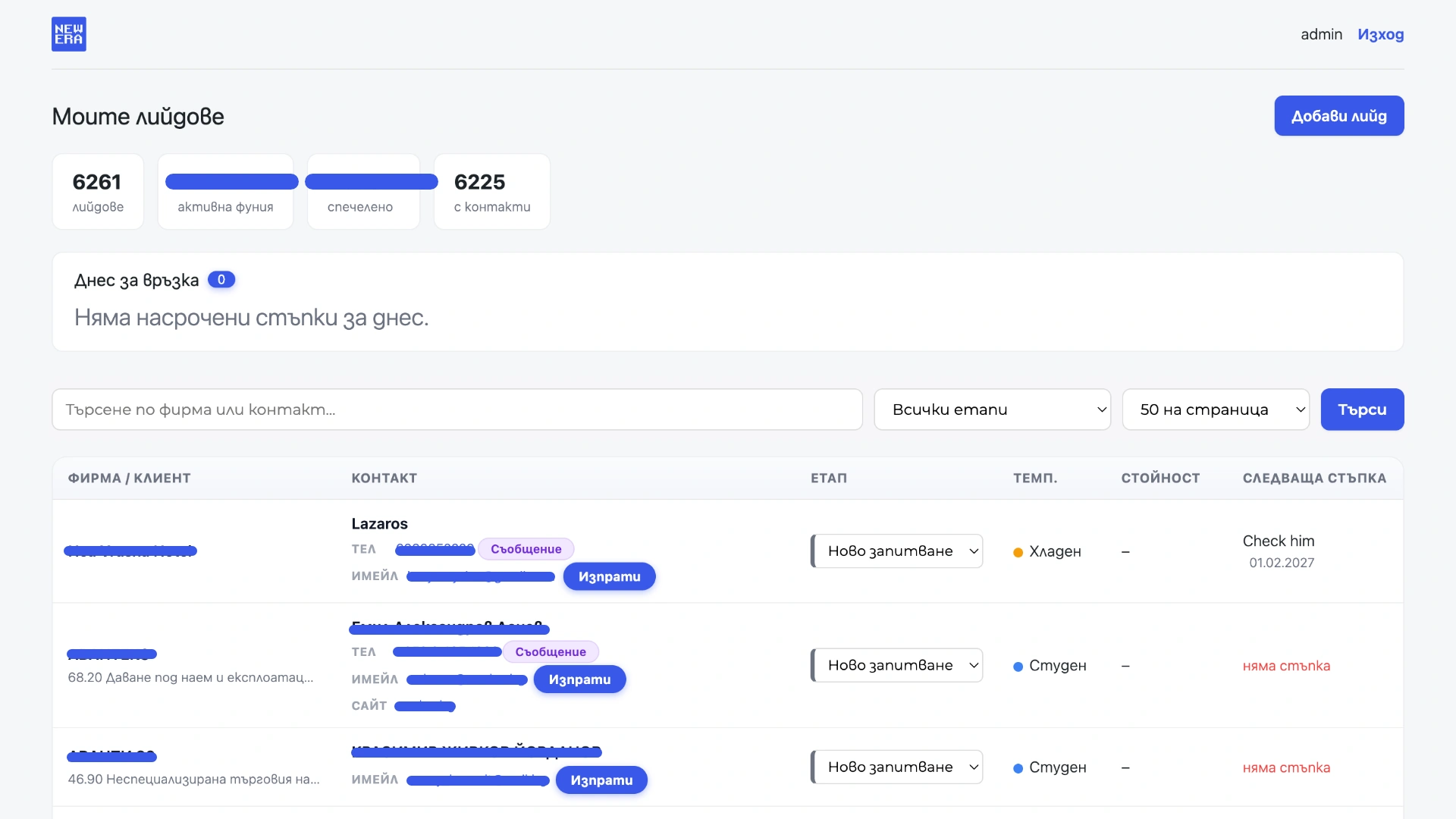
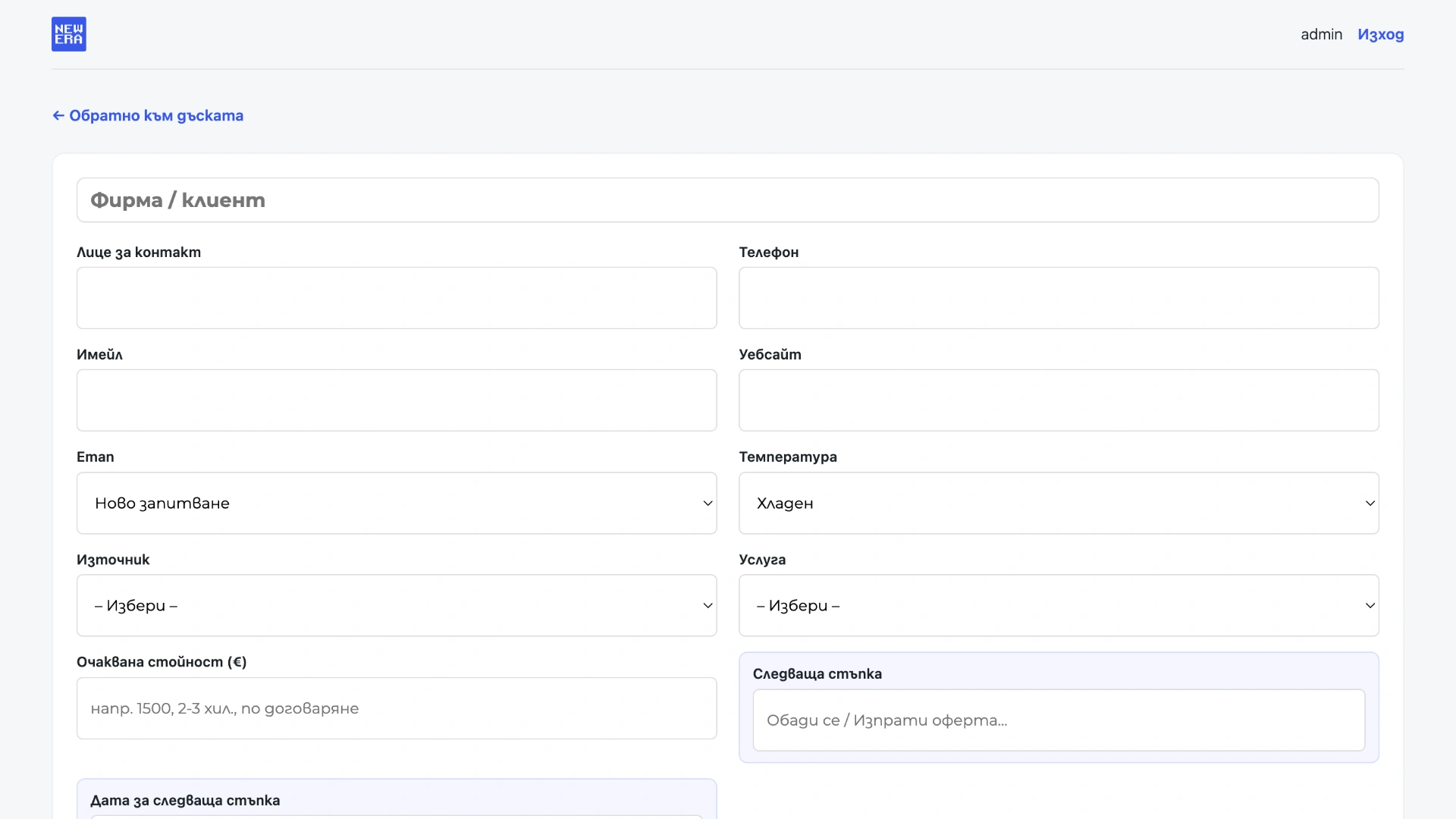
Once the system identifies a suitable company, it is added as a lead in our CRM.
We now have all the information we actually need in one place.
- What is the company?
- What does he do?
- Who runs it?
- How can we contact him?
- What is the approximate size of the business?
- What is the status of this lead?
This means that instead of information being scattered across Excel spreadsheets, notes, emails, and people's memories, it is organized in one place.
Step 3: We don't send the same cold email to everyone
This was one of the most important parts for us.
We didn't want automation that simply sends:
„Hello, we offer website development services. Are you interested?“
several thousand people.
That's automation.
But it's poor automation.
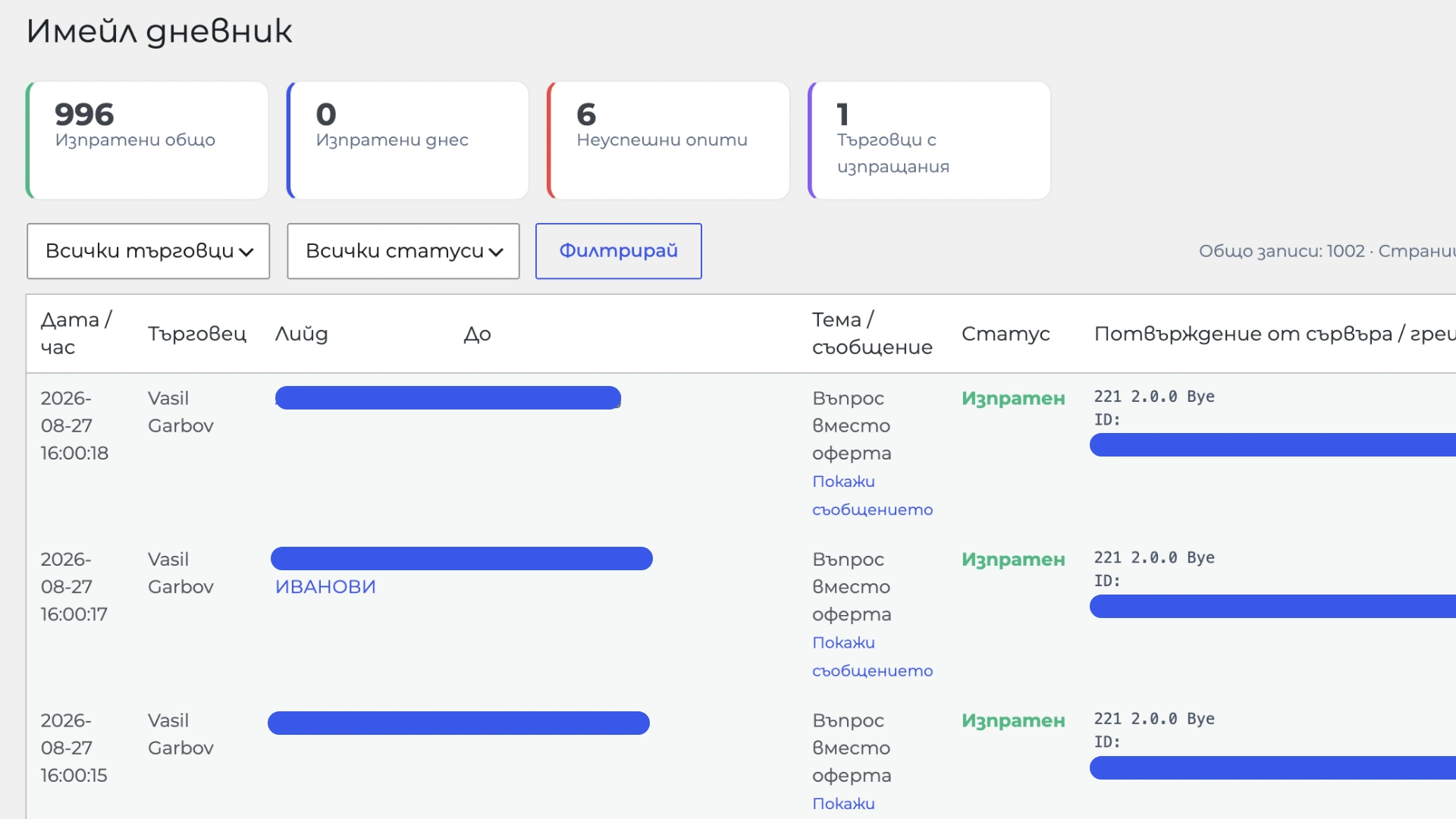
We use the available information about the company to generate personalized first contact, which takes into account the specific business and its operations.
For example, the message might look something like this:
„Hello, Ms. Georgieva,
We reviewed your company's operations and saw that you are in the mechanical engineering industry.
We work with B2B companies for which the website plays a crucial role even before the first conversation with a potential client or international partner—it must quickly showcase the company’s production capabilities, capacity, certifications, completed projects, and the markets in which the company operates.
We noticed a few specific points in your online presentation that we think could be improved. If this is a topic of interest to you, I’d be happy to send them to you.“
The difference is huge.
The recipient doesn't see a message that was obviously sent to 5,000 other companies.
He sees that the other side knows Who is he, what does his company do, and why is she even contacting him?.
And this is becoming increasingly important.
According to a Gartner study, B2B buyers increasingly prefer to research potential suppliers on their own through digital channels, and 70% say they prefer a fully digital self-service experience. At the same time, irrelevant mass outreach can directly turn off a potential customer.
That is why our goal was not to send more emails.
We were supposed to send more relevant emails.
Step 4: The system runs automatically, but people remain where they are needed
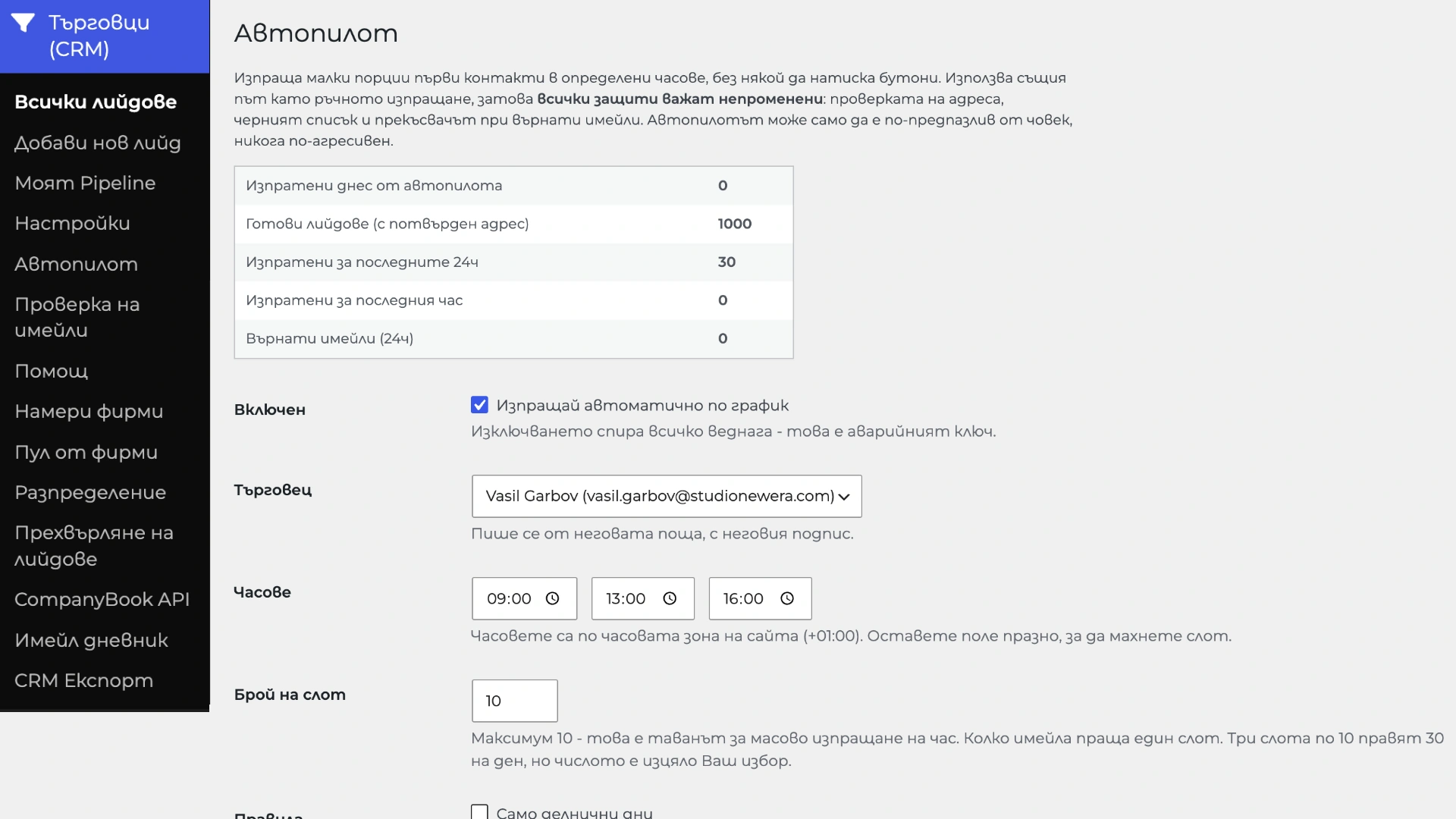
Once the leads have been selected and the messages have been prepared, the system can automatically initiate the initial outreach.
From there on, our CRM helps us manage the entire process.
And this applies not only to companies found automatically.
When someone contacts us through a referral, via the website, through social media, or through another channel, I can manually add them to the same system.
Then I see:
- whether we had a meeting;
- whether we have sent an offer;
- What is its value?;
- what we have proposed;
- what stage the conversation is at;
- Was a follow-up conducted?;
- What's the next step?;
- what we need to do for the client;
and ultimately—did we close the sale?.
So automation does not replace sales.
It eliminates much of the chaos around it.
And what was the result?
About a month after the system went live, we made our first sale through it.
The proceeds from this sale were sufficient to cover the investment in CRM development, the API services used, and the automation costs.
But for us, something else was more interesting.
By the time of the first actual conversation, the potential customer has already:
knew who we were;
knew what we did;
understood how we could be helpful;
and he could see that we had paid special attention to his business.
And the system had done almost all the work involved in finding, screening, and making initial contact without any daily manual intervention on our part.
For us, that is exactly what good business automation is all about.
Business automation does not necessarily mean CRM
This is important.
The CRM system is simple our specific example.
In another business, the problem might be completely different.
For example, an employee spends three hours every day transferring information between several systems.
Or someone manually processes dozens of requests and distributes them among different people.
Or the same reports are generated every week.
Or employees check documents, invoices, orders, and inventory.
Or potential customers are lost because no one follows up in a timely manner.
Or the company has a huge amount of information, but no way to put it to practical use.
In each of these cases, the question is the same:
„Can the system do this work instead of a person—or at least save the person 80% of it?“
Sometimes the answer is CRM.
Sometimes it's internal software.
Sometimes it's AI.
Sometimes there are several systems already in use that simply need to start communicating with each other.
And most often, it's a combination of all of these.
We don't sell „AI.“ We try to solve business problems.
Technology in and of itself is not particularly important.
It doesn't make sense for a business to use AI just because everyone is talking about AI right now.
There's no point in automation if it automates the wrong process.
And there's no point in developing a massive system if the problem can be solved in a much simpler way.
For us, the problem was:
How can we find the right B2B companies and start relevant conversations with them without constantly relying on manual searches and cold outreach?
That's why we developed a system specifically to address this problem.
And it started paying off as early as the first month.
So, what can be automated in your business?
This is the question that, in our opinion, almost every business owner should ask themselves.
- Which task is important but is done over and over again?
- Where do you waste the most time?
- Where is the information entered manually?
- In what ways do you rely too much on a specific person?
- Where are potential customers or opportunities being lost simply because there is no established system in place?
Very often, that is precisely where the best opportunity for automation lies.
В Studio New Era We can take a look at the specific processes in your business and assess what actually makes sense to automate—from data collection and processing to CRM systems, AI integrations, sales processes, and custom in-house software.
You don't need to know which API you need, which AI model to use, or how the system should be built.
We'll start with the business problem.
And the technology comes after that.
If there’s a process in your business that often makes you think:
„Can't this be done automatically?“
It's probably worth talking about.
Schedule a consultation with Studio New Era, and let's see what we can automate in your business.